

Characterization of chronic abdominal pain in children at the Eduardo Agramonte Piña Provincial Pediatric Hospital
Abstract
Introduction: Recurrent abdominal pain (RAP) is a common symptom in children and causes great anxiety to the family. It represents up to 10% of pediatric consultations. It occurs frequently among schoolchildren and adolescents and in 85 to 90% of cases the cause is due to a functional disorder.
Objective: To characterize the behavior of recurrent abdominal pain in children admitted to the Eduardo Agramonte Piña pediatric hospital in the province of Camagüey.
Methods: An observational, descriptive, cross-sectional, retrospective study was carried out, whose universe of work consisted of 122 patients admitted with a diagnosis of recurrent abdominal pain, during the study period. To obtain the information, document analysis was used by reviewing the clinical histories of the total number of patients treated and the bibliographic materials.
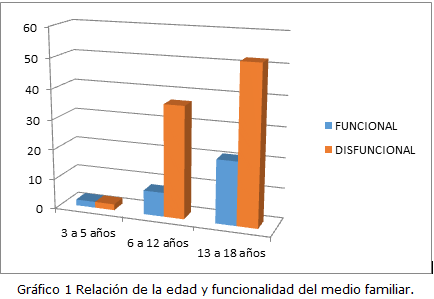
Results: Of a total of 122 patients studied, the most affected group corresponded to 13 to 18 years of age, followed by the school group of 7 to 12 years for a total of 73 and 45 cases, respectively. Among the factors that increased the frequency was sustained exposure to stressful situations related to the dysfunction of the child's family and social environment, expressed in the results: of 122 patients, 91 come from dysfunctional socio-environmental environments, with predominance in the schoolchildren and adolescents stages.
Conclusions: The number of patients with negative laboratory results was greater than that of positive ones, that is why abdominal pain of functional origin exceeded that of organic origin.
DeCS: ABDOMINAL PAIN/etiology; INPATIENTS; PREVALENCE; PEDIATRICS; HOSPITALS, PEDIATRIC.
Downloads
References
1. Ortiz L, Velasco M. Dolor crónico y psiquiatría. rev med clin conde [Internet]. Oct 2017 [12 Abr 2022];28(6):866-73. Disponible en: https://pdf.sciencedirectassets.com/312299/1-s2.0-S0716864017X00072/1-s2.0-S0716864017301438/main.pdf?X-Amz-Security-
2. Rodríguez L, Faúndez R, Maure D. Dolor Abdominal Crónico en pediatría. Rev Chil Pediatr [Internet]. 2012 [citado 12 Abr 2022];83(3):279-89. Disponible en: https://www.revistachilenadepediatria.cl/index.php/rchped/article/view/2861/2623
3. Casado Sánchez ML, Fernández Rodríguez M, García Rebollar C, de Juanes Toledo B, Martínez García MS, Martínez Rubio MV, et al. Dolor abdominal crónico. Guías de actuación conjunta Pediatría Primaria-Especializada [Internet]. 2017 [citado 12 Abr 2022]. Disponible en: https://www.ampap.es/wp-content/uploads/2017/04/2017_04_GS_DAC.pdf
4. Baaleman DF, Di Lorenzo C, Benninga MA, Saps M. The effects of the Rome IV criteria on pediatric gastrointestinal practice. Curr Gastroenterol Rep [Internet]. 2020 [citado 12 Abr 2022]; 22: 21. Disponible en: https://link.springer.com/article/10.1007/s11894-020-00760-8
5. Hidalgo Montes I, Molina Arias M. Dolor abdominal crónico y recurrente. Adolescere [Internet]. 2021 Ene-Feb [citado 12 Abr 2022]; IX(1): 28-41. Disponible en: https://www.adolescere.es/dolor-abdominal-cronico-y-recurrente/
6. Drossman DA, Hasler WL. Rome IV- Functional GI disorders: disordersofgutbraininteraction. Gastroenterology [Internet]. 2016 May [citado 12 Abr 2022];150(6):1257-61. Disponible en: https://theromefoundation.org/wp-content/uploads/gastroenterology-rome-iv-introduction.pdf
7. Benninga MA, Nurco S, Faure C, Hyman PE, James Roberts IS, Schechter NL. Childhood Functional Gastrointestinal Disorders: Neonate/ Toddler. Gastroenterology [Internet]. 2016 [citado 12 Abr 2022];150: 1443-55. Disponible en: http://christophefaure.org/_media/rome-iv-toddlers-functional-gastrointestinal-disorder.pdf
8. Hyams JS, Di Lorenzo C, Saps M, Shulman RJ, Staiano A, van Tilburg M. Childhood Functional Gastrointestinal Disorders: Child/ Adolescent. Gastroenterology [Internet]. 2016 [citado 05 May 2022]; 150(6): 1456-68. Disponible en: https://theromefoundation.org/wp-content/uploads/childhood-functional-gastrointestinal-disorders-child-adolescent.pdf
9. Mejía M, Velasco-Benítez CA, Díaz J. La prevalencia y las posibles asociaciones de los desórdenes gastrointestinales funcionales en escolares y adolescentes de colegios privados de Managua, Nicaragua. Acta Gastroenterol Latinoam [Internet]. 2017 [citado 26 Abr 2022];47(3):163-8. Disponible en: https://www.redalyc.org/pdf/1993/199352918002.pdf
10. Nelissen LG, Koppen IJN, Follett FR, Boggio-Marzet C, Saps M, Garzon K, et al. Prevalencia de los trastornos funcionales digestivos entre los adolescentes de Buenos Aires, Argentina. Rev Gastroent Méx [Internet]. 2018 Jun [26 Abr 2022];83(4):367-374. Disponible en: https://www.sciencedirect.com/science/article/pii/S037509061830096X
11. Velasco-Benítez CA. El síndrome de intestino irritable como causa de dolor abdominal crónico. Rev cuban pediatr [Internet]. 2019 [citado 26 Abr 2022];91(2). Disponible en: https://revpediatria.sld.cu/index.php/ped/article/view/711/308
12. Mearin F, Ciriza C, Mínguez M, Rey E, Mascort JJ, Peña E, et al. Guía de práctica clínica del síndrome del intestino irritable con estreñimiento y estreñimiento funcional en adultos: tratamiento. Atención Primaria [Internet]. 2017 [citado 26 Abr 2022];49(3):177-94. Disponible en: https://www.elsevier.es/es-revista-atencion-primaria-27-pdf-S0212656717301312
13. Fuentes C, Ortiz L, Wolfensonb A, Schonffeldt G. Dolor crónico y depresión. Rev med clin Condes [Internet]. 2019 Nov-Dic [citado 26 Abr 2022];30(6):459-65. Disponible en: https://www.elsevier.es/es-revista-revista-medica-clinica-las-condes-202-articulo-dolor-cronico-y-depresion-S0716864019300902
14. Pereda Pérez A, Manrique Martínez I, Pineda Güil M. Dolor abdominal recurrente. Protocolos diagnósticos y terapéuticos en pediatría [Internet]. España: Asociación Española de Pediatría [Internet]. 2008 [citado 26 Abr 2022]. Disponible en: https://www.aeped.es/sites/default/files/documentos/4-DAR.pdf
15. Infante Pina D. Dolor abdominal crónico y recurrente. Pediatr Integral [Internet]. 2019 Oct-Nov [citado 26 Abr 2022];XXIII(7):339-47. Disponible en: https://www.pediatriaintegral.es/publicacion-2019-10/dolor-abdominal-cronico-y-recurrente/
16. González Martín L, Vegas Álvarez AM. El maravilloso mundo del dolor abdominal a través de casos clínicos. Congreso de Actualización Pediatría 2020 [Internet]. Madrid: Lúa Ediciones 3.0; 2020 [citado 26 Abr 2022]. Disponible en: https://www.aepap.org/sites/default/files/documento/archivos-adjuntos/congreso2020/341-352_el_maravilloso_mundo_del_dolor_abdominal.pdf
17. Abbott RA, Martin AE, Newlove-Delgado TV, Bethel A, Thompson-Coon J, Whear R, et al. Psychosocial interventions for recurrent abdominal pain in chidwood (review). Cochrane Database Syst Rev [Internet]. 2017 Ene [citado 04 May 2022]; 2017(1): CD010971 Disponible en: https://www.ncbi.nlm.nih.gov/pmc/articles/PMC6464036/
18. Sangrós Giménez A, Hernández Abadía R, Subirón Ortego R, Aguilar de la Red Y, Calvo Escribano C, de Arriba Muñoz A. Memoria docente Unidad Docente: Servicio de Pediatría. Año: 2019. Bol Pediatr Arag Rioj Sor [Internet]. 2021 [citado 04 May 2022]; 51:26-29. Disponible en: https://sectorzaragozados.salud.aragon.es/uploads/documentos/documentos_Pediatria_19_memoria_d79b50a8.pdf
19. Vivenes Lisbeth, Navarro D, López K, Aguiar C, Polanco I, Belandria K, et al. Dolor abdominal crónico orgánico y funcional en niños: prevalencia en la consulta especializada. Gen [Internet]. Jul 2015 [citado 04 May 2022];69(2):23-27. Disponible en: http://ve.scielo.org/scielo.php?script=sci_arttext&pid=S0016-35032015000200002
Published
How to Cite
Issue
Section
License
Copyright (c) 2023 Tamara Rodríguez-Fuentes

This work is licensed under a Creative Commons Attribution-NonCommercial 4.0 International License.
Copyright: Camagüey Medical Archive Magazine, offers immediately after being indexed in the SciELO Project; Open access to the full text of the articles under the principle of making available and free the research to promote the exchange of global knowledge and contribute to a greater extension, publication, evaluation and extensive use of the articles that can be used without purpose As long as reference is made to the primary source.
Conflicts of interest: authors must declare in a mandatory manner the presence or not of conflicts of interest in relation to the investigation presented.
(Download Statement of potential conflicts of interest)
The Revista Archivo Médico de Camagüey is under a License Creative Commons Attribution-Noncommercial-No Derivative Works 4.0 International (CC BY 4.0).
This license allows others to distribute, to mix, to adjust and to build from its work, even for commercial purposes, as long as it is recognized the authorship of the original creation. This is the most helpful license offered. Recommended for maximum dissemination and use of licensed materials. The full license can be found at: https://creativecommons.org/licenses/






 22 julio 2025