

Evaluation of postoperative pain and the use of complementary therapies by nursing
Abstract
Background: pain is one of the factors that mostly affects the process of recuperation by influencing the progress of the patient. Pain produces physical and mental suffering, sleep disorders, effects on the cardiovascular and respiratory systems and delays in movement. As nursing personnel are responsible for the care of patients, it is their responsibility to identify factors that put patients’ health at risk.
Objective: to evaluate post-surgical pain and application of complementary therapies by the nursing personnel.
Methods: a longitudinal-cuantitative study was done among patients attended at the surgical ward of the Hospital General Santo Domingo of Santo Domingo de los Tsáchilas from January to February 2018. The universe to be studied consisted of 91 patients subjected to outpatient surgery.
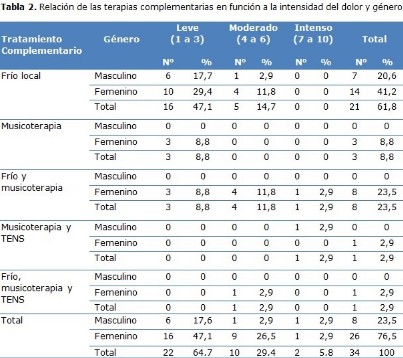
Results: out of 91 patients evaluated, 34 patients or 37.4% referred post-surgical pain, 23.5% or 8 patients were male and 26 or 76.5% were female. The intensity range of pain that prevailed the most was mild which was reported by 22 patients. Out of those 22 patients, 10 patients manifested not having felt any pain after the application of complementary therapy, while 10 patients maintained the same range of pain but with minor intensity and 2 patients did not present any improvement at all.
Conclusions: good management of pain was shown by the nursing staff through the use of complementary therapies that was found to be favorable as patients reported pain relief. Application of local cold showed the most acceptance and proved to be the most beneficial amongst patients.
DeCS: PAIN, POSTOPERATIVE/nursing; COMPLEMENTARY THERAPIES/nursing; LONGITUDINAL STUDIES; AMBULATORY SURGICAL PROCEDURES/nursing; PATIENT SATISFACTION.
Downloads
References
1. Chou R, Gordon DB, de León-Casasola OA, Rosenberg JM, Bickler S, Brennan T, et al. Guidelines on the Management of Postoperative Pain. J Pain [Internet]. 2016 Feb [citado 12 Dic 2018];17(2):[aprox. 6 p.]. Disponible en: https://www.jpain.org/article/S1526-5900(15)00995-5/pdf
2. Meier Alcione C, Duarte Smith F, Pretto Renz C, Christiane de Fátima C, Sonego Gomes J, Mate Dezordi K, et al. Análise da intensidade, aspectos sensoriais e afetivos da dor de pacientes em pós-operatório imediato. Rev Gaúch Enfermag [Internet]. Jul 2017 [citado 12 Dic 2018];38(2):[aprox. 8 p.]. Disponible en: http://www.scielo.br/pdf/rgenf/v38n2/0102-6933-rgenf-1983-144720170262010.pdf
3. Machado Alba J, Machado Duque M, Calderón Flórez V, González Montoya A, Cardona Escobar F, Ruiz García R, et al. ¿Estamos controlando el dolor posquirúrgico? Rev Colombia Anestesiol [Internet]. Mar 2013 [citado 12 Dic 2018];41(2):[aprox. 7 p.]. Disponible en: https://ac.els-cdn.com/ S2256 20 8713000084/1-s2.0-S22562087130 00084-main.pdf?_tid=75122b24-33c3-49 8f -b ad8-9e7bc5c8ee3 3&acdnat =153039 0898_ 1cb2aa fae8d8 6f8a1a 0f ff 3 1 454523a9
4. Montealegre Gómez D. Retos para enfermería en el cuidado de personas con dolor: una forma de humanización. Rev Cuidarte [Internet]. Abr 2014 [citado 12 Dic 2018];5(1):[aprox. 10 p.]. Disponible en: https://www.revistacuidarte.org/index.php/cuidarte/article/view/106/170
5. Montero Ibáñez R, Manzanares Briega A. Escalas de valoración del dolor. Rev Jano [Internet]. Feb-Mar 2005 [citado 12 Dic 2018];LXVIII (1553):[aprox. 10 p.]. Disponible en: https://s3.amazonaws.com/academia.edu.documents/48564232/escalasvaloraciondeldolor.pdf?AWSAccessKeyId=AKIAIWOWYYGZ2Y53UL3A&Expires=1538959545&Signature=NPTSwUjnpNkcNJjZqCTdnNAufYA%3D&response-content-disposition=inline%3B%20filename%3DEscalas_de_valoracion_del_dolor.pdf
6. Smeltzer SC, Bare BG. Brunnerand Suddarth´s Textbook of Medical. Surgical Nursing. Philadelphia:Lippincott Company;2013.
7. Comunidad de Madrid. Plan de Humanización de la Asistencia Sanitaria 2016-2019 [Internet]. Madrid: Consejería de Sanidad; 2016. Disponible en: http://humanizandolosc uida do sintensivos.com/wp-content/uploads/2 016/ 10/PlanHUC I.pdf
8. Pérez Guerrero A, Aragón Poce M, Torres Morera L. Dolor postoperatorio: ¿hacia dónde vamos? Rev Soc Esp Dolor [Internet]. Feb 2017 [citado 14 Dic 2018];24(1):[aprox. 3 p.]. Disponible en: http://scielo.isc iii.es/scielo.php?script=sci_arttext&pid=S1134-80462017000100001&lng=es
9. Moreno Monsiváis M, Muñoz Rodríguez M, Interal Guzmán M. Satisfacción con el manejo del dolor posoperatorio en pacientes hospitalizados. Aquichan [Internet]. 2014 [citado 12 Dic 2018];14(4):[aprox. 12 p.]. Disponible en: http://www.redalyc.org/articulo.oa?id=74133057002
10. González Gavilánez A, Vicuña Pozo M, Villena Galarza M, Bastidas Soria J, González Benítez S, Pimienta Concepción I. Manejo del dolor postquirúrgico en los pacientes intervenidos de cirugía artroscópica. Rev Cubana Reumatol [Internet]. 2017 [citado 12 Dic 2018];17(3):[aprox. 7 p.]. Disponible en: http://scielo.sld.cu/scielo.php?script=sci_arttext&pid=S1817-59962017000300002
11. Carneiro de Araujo C, Adel Ashmawi H, De Paula Posso I. Sex and Pain Perception and Analgesia. Rev Bras Anestesiol [Internet]. 2011 Nov-Dic [citado 12 Dic 2018];61(6):[aprox. 14 p.]. Disponible en: https://ac.elscdn.com/S0034709411700915/1-s2.0-S0034709411700915-main.pdf?_tid=b6c8e6c7-d38d-4b8990002eab95adff3e&acdnat=1538768514b
cbd90c63e900b3b02ae3e340f16ca3b
12. Bolibar Ribas I, Catalá Puigbó E, Cadena Caballero R. El dolor en el hospital: de los estándares de prevalencia a los de calidad. Rev Esp Anestesiol Reanim [Internet]. 2005 [citado 12 Dic 2018];52:[aprox. 9 p.]. Disponible en: https://www.sedar.es/images/stories/documentos/fondosredar/volumen52/n3/orig.pdf
13. Robleda Font G, Sillero Sillero A, Puig Saladich T, Gich Saladich I, Baños Diez J. Influencia del estado emocional prequirúrgico en el dolor postoperatorio tras cirugía ortopédica y traumatológica. Rev Latino-Am Enfermagem [Internet]. Sep-Oct 2014 [citado 12 Dic 2018];22(5):[aprox. 7 p.]. Disponible en: http://www.scielo.br/pdf/rlae/v22n5/es_0104-1169-rlae-22-05-00785.pdf
14. Moreno Monsiváis M, Fonseca Niño E, Interial Guzmán M. Factores asociados con la intensidad del dolor en pacientes mexicanos hospitalizados en periodo postoperatorio. Rev Soc Españ Dolor [Internet]. 2017 [citado 12 Dic 2018];24(1):[aprox. 7 p.]. Disponible en: http://scielo.isciii.es/scielo.php?pid=S1134-80462017 000100 002 &sc ript=s ciarttext&tlng=en
15. Velázquez González K. Deficiencias del tratamiento del dolor postoperatorio. Particularidades en el anciano: specialfeatures in theelderly. Rev cuba anestesiol reanim [Internet]. Abr 2012 [citado 2018 Jun 20];11(1):[aprox. 9 p.]. Disponible en: http://scielo.sld.cu/scielo.php?script=sci_arttext&pid=S1726-67 182012000100008&lng=es
16. Watkins Ammara A, Johnson Timothy V, Shrewsberry Adam B, Paymon Nourparvar P, Madni Tarik D, Watkins Colyn J, et al. Ice Packs Reduce Postoperative Midline Incision Pain and Narcotic Use: A Randomized Controlled Trial. J Am Colleg Surg [Internet]. 2014 Sep [citado 12 Dic 2018];219(3):[aprox. 7 p.]. Disponible en: https://www.sciencedirect.com/science/article/pii/S1072751514004128
17. Vargas Córdova R, Guzmán Martínez L. Uso de crioterapia en la herida quirúrgica, para reducir el dolor y consumo de analgésicos estándar en las 48 horas del postoperatorio, en pacientes sometidos a laparotomía media por abdomen agudo quirúrgico, en el Hospital San Francisco de Quito en el periodo de mayo a octubre del año 2016 [Tesis doctoral]. Ecuador: Universidad Central del Ecuador; 2017 [citado 12 Dic 2018]. Disponible en: http://www.dspace.uce.edu.ec/bitstream/25000/11285/1/T-UCE-0006-008.pdf
18. Fernández Medina I. Alternativas analgésicas al dolor de parto. Enferm glob [Internet]. Ene 2014 [citado 18 Jun 2018];13(33):[aprox. 7 p.]. Disponible en: http://scielo.isciii.es/scielo.php?script=sci_arttext&pid=S1695-614120 1400 0100020&lng=es
19. Alcántara Montero A, González Curado A. Nueva Guía de la Asociación Americana del Dolor sobre dolor postoperatorio. Rev Soc Esp Dolor [Internet]. Jun 2016 [citado 12 Dic 2018];23(3):[aprox. 2 p.]. Disponible en: http://scielo.isciii.es/scielo.php?script=sci_arttext&pid=S1134-80462016000300008&lng=es
Published
How to Cite
Issue
Section
License
Copyright (c) 2019 Jorge Luis Rodríguez-Díaz, Gina Patricia Galván-López, Mariela Ximena Pacheco-Lombeida, Melynn Parcon-Bitanga

This work is licensed under a Creative Commons Attribution-NonCommercial 4.0 International License.
Copyright: Camagüey Medical Archive Magazine, offers immediately after being indexed in the SciELO Project; Open access to the full text of the articles under the principle of making available and free the research to promote the exchange of global knowledge and contribute to a greater extension, publication, evaluation and extensive use of the articles that can be used without purpose As long as reference is made to the primary source.
Conflicts of interest: authors must declare in a mandatory manner the presence or not of conflicts of interest in relation to the investigation presented.
(Download Statement of potential conflicts of interest)
The Revista Archivo Médico de Camagüey is under a License Creative Commons Attribution-Noncommercial-No Derivative Works 4.0 International (CC BY 4.0).
This license allows others to distribute, to mix, to adjust and to build from its work, even for commercial purposes, as long as it is recognized the authorship of the original creation. This is the most helpful license offered. Recommended for maximum dissemination and use of licensed materials. The full license can be found at: https://creativecommons.org/licenses/






 22 julio 2025